
Living in Private Accomodation
More independence — but usually more responsibility too
Moving into privately rented accommodation can feel like a big step up from halls. You may have more freedom, more choice over where you live and who you live with, but you will usually also have more bills, more responsibilities and more things that can go wrong if you have not budgeted carefully.
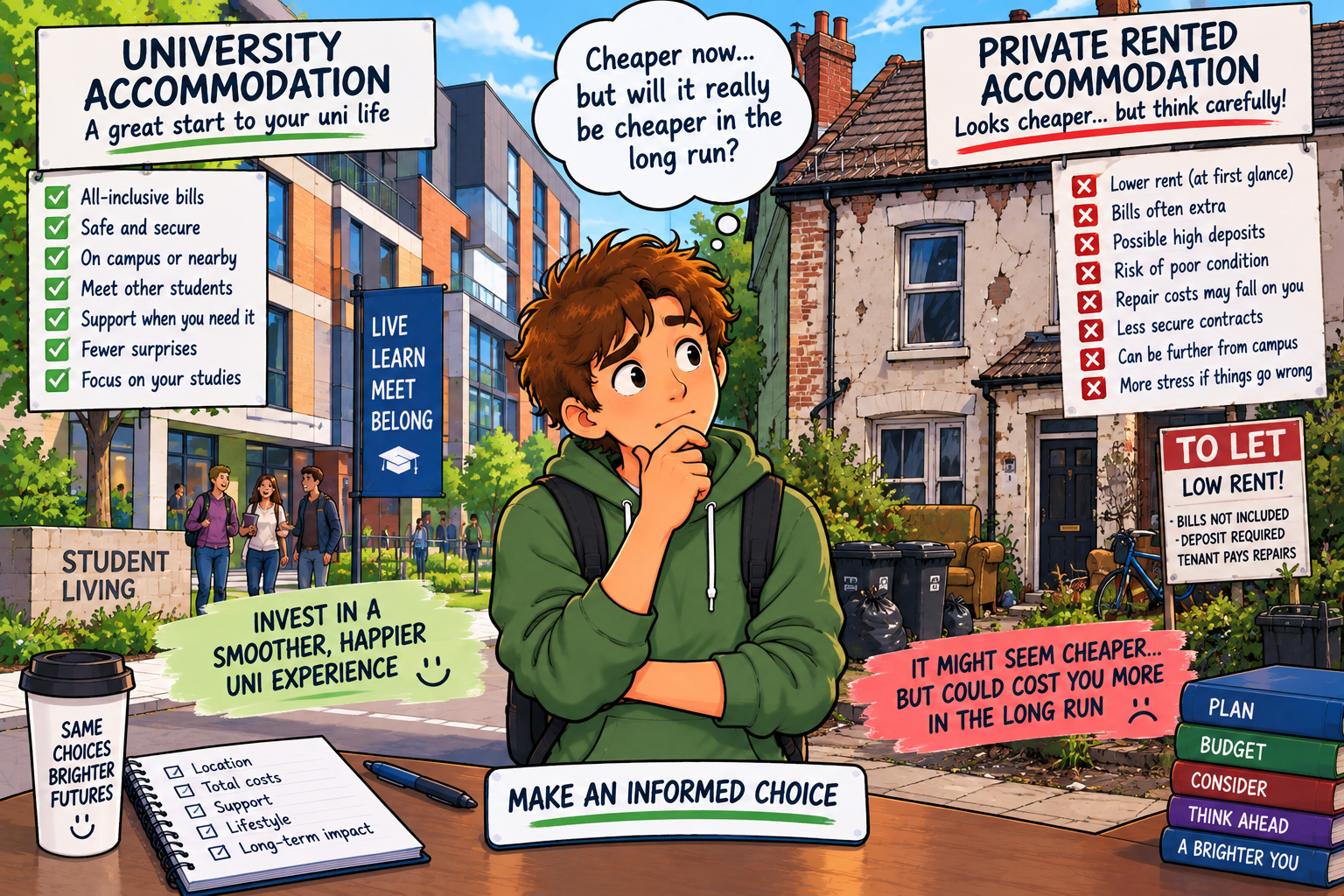
The advertised rent is only part of the real cost. Before signing anything, check whether gas, electricity, water, broadband or other bills are included. A house that looks cheaper than halls can end up costing more once utilities, travel, insurance and other expenses are added.
You may also need to pay a deposit and possibly rent in advance. Make sure you understand exactly what you are paying, get receipts and keep copies of your tenancy agreement and any inventory provided when you move in. Take photographs of the condition of the property at the start of the tenancy, particularly if anything is damaged or worn.
Sharing a house means sharing responsibility too. Agree early on how rent, energy, broadband and household shopping will be divided. It is much easier to deal with this before someone owes three months of electricity payments or everybody discovers they thought somebody else was paying the broadband bill.
Location is another important part of the calculation. A cheaper house a long way from campus may mean regular bus fares, train costs or taxis. Somewhere slightly more expensive within walking distance could actually cost less overall.
Private accommodation also brings occasional costs that students in halls may not have to think about. You might need cleaning supplies, kitchen equipment, light bulbs, basic tools or other household items. Heating bills can also rise significantly during winter, particularly in an older or poorly insulated property.
Before committing yourself, look at the whole cost of living there for the year rather than concentrating only on the weekly rent.
Do This Now
- Work out the total rent for the full tenancy, not just the weekly figure.
- Check exactly which household bills are included.
- Estimate gas, electricity, water and broadband if you will pay them separately.
- Add your likely travel costs to and from university.
- Find out how much deposit and rent in advance you will need.
- Agree with your housemates how shared bills will be divided and paid.
- Photograph the condition of the property when you move in.
- Keep copies of your tenancy agreement, inventory and payment records.
Common Mistake
Choosing the house with the lowest advertised rent without adding the cost of energy, broadband, transport and other household bills.
A £10 or £15 weekly saving on rent can disappear very quickly if the property costs much more to heat or requires you to pay for regular transport to campus.
A Useful Question to Ask
“What will it actually cost me to live here for the whole year?”
When comparing properties, try adding together:
Rent + household bills + broadband + travel + insurance + other regular housing costs
That figure is much more useful than comparing rent alone.