Food & Shopping
Eating well doesn’t have to be expensive
Food will probably be one of your largest regular expenses after accommodation.
Fortunately, it is also one of the areas where planning can make a big difference.
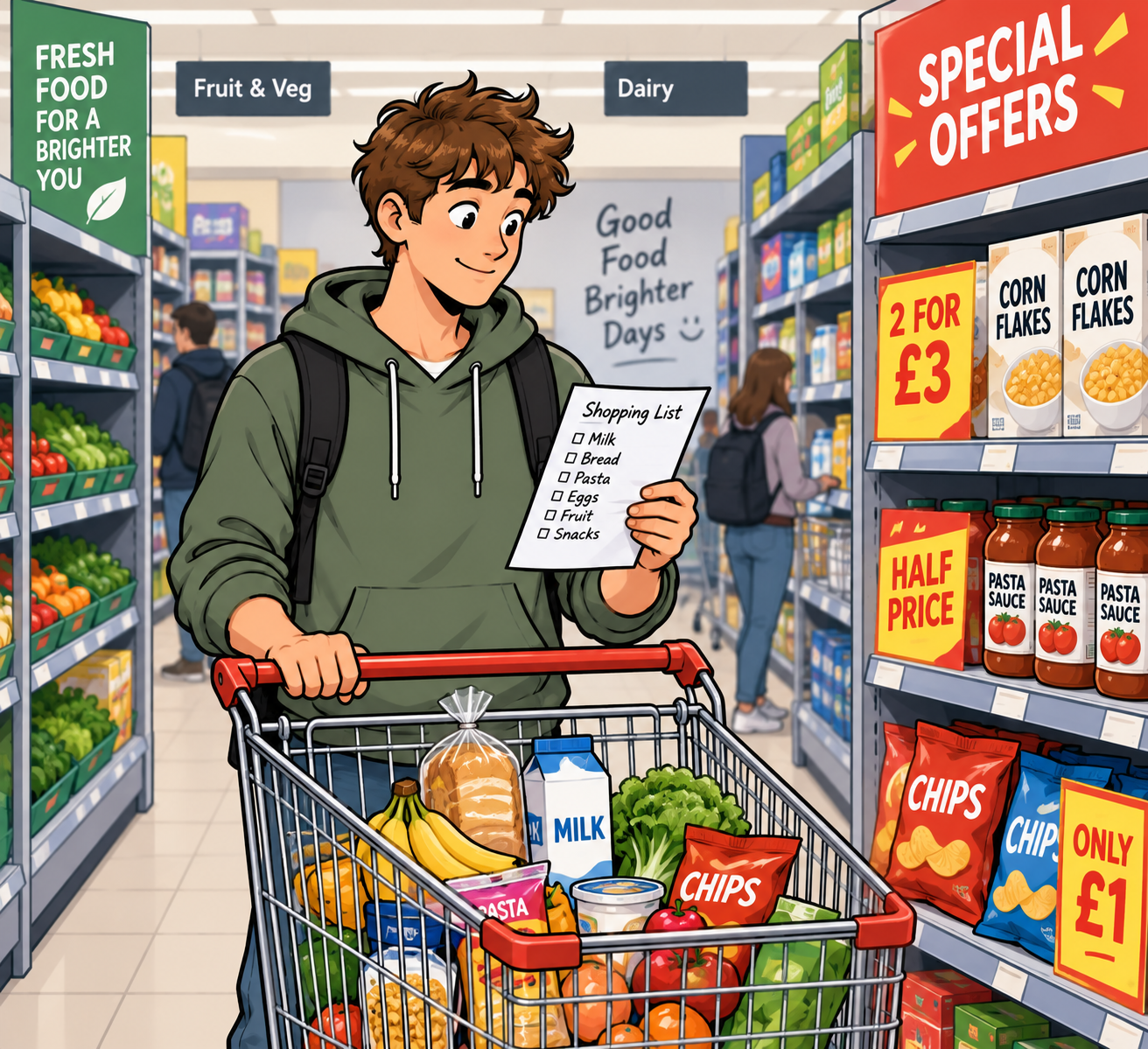
Make a shopping list
Decide what meals you are likely to eat before you go shopping.
A list can help prevent impulse purchases and reduce food waste.
Don’t shop hungry
It sounds trivial, but hungry shoppers often buy more snacks and convenience food.
Compare prices
The biggest or most famous brand is not automatically the best value.
Supermarket own-brand products can often be considerably cheaper.
Look at the price per unit
A larger packet isn’t always cheaper.
Supermarket shelf labels normally show the cost per 100g, litre or item, making it easier to compare different pack sizes.
Cook several portions
Meals such as pasta sauces, chilli, curry, casseroles and soups can often be cooked in larger quantities.
You can refrigerate or freeze the extra portions.
That can save both money and time.
Use what you already have
Before shopping, check your cupboards, fridge and freezer.
Planning meals around food you already own reduces waste.
Learn the difference between dates
Use by dates are about food safety.
Best before dates are generally about quality.
Understanding the difference may help reduce unnecessary waste, but always follow food safety advice.
Share carefully
Buying some items with housemates can save money, particularly things such as cleaning products, cooking oil, sauces or bulk ingredients.
But agree clearly who is paying for what.