
Getting Help if you're struggling
Recognising Money Problems and Getting Help Early
Financial problems are easier to tackle early
Almost everyone has periods when money feels tight. The important thing is recognising when a temporary shortage is becoming a bigger problem.
Warning signs might include regularly using your overdraft for essential food, missing rent or bill payments, borrowing to repay other borrowing or avoiding looking at your bank balance.
The earlier you understand the size of the problem, the more options you are likely to have. Start by completing an honest budget showing your real income, essential costs and debts.
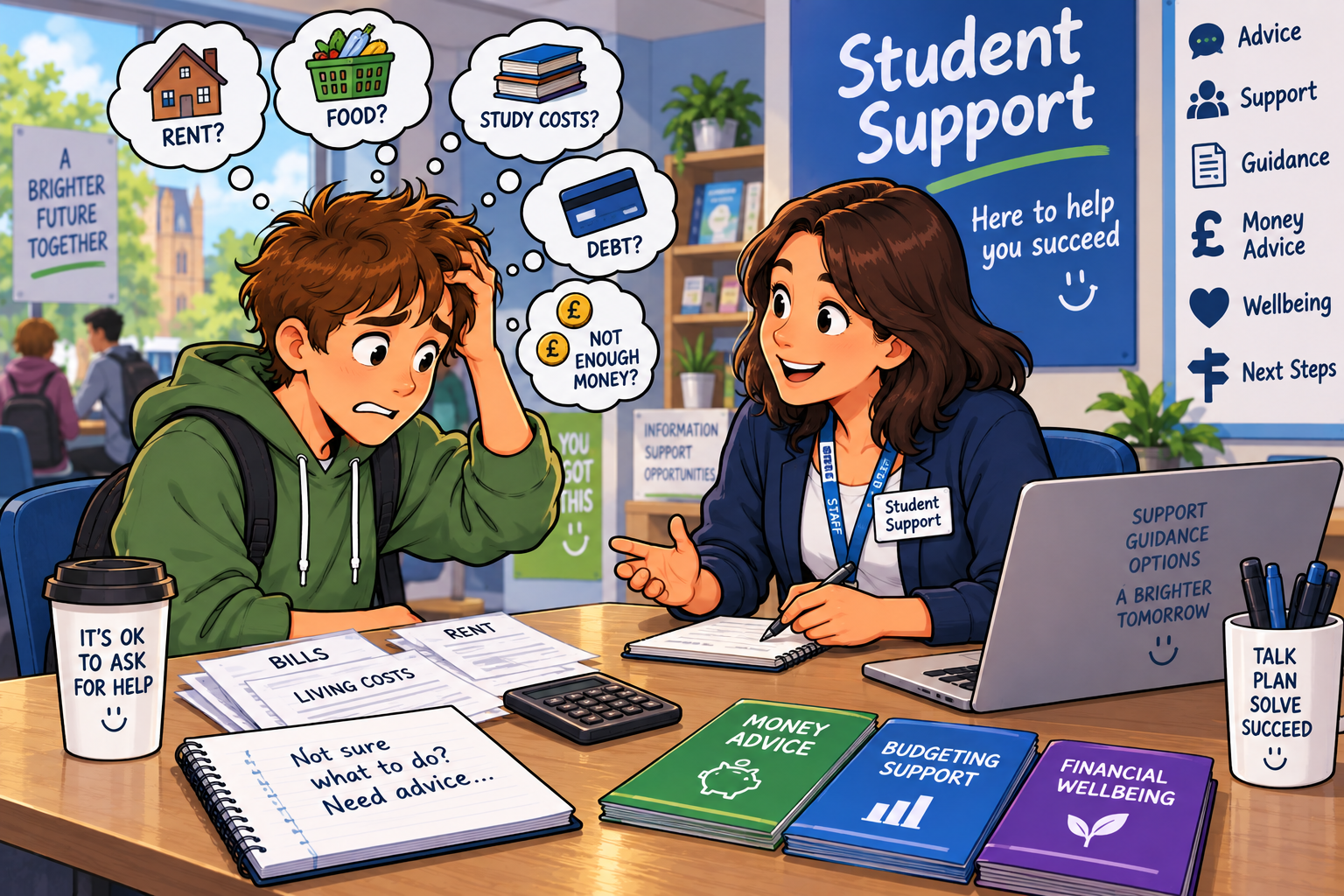
Your university may offer financial-support services, hardship funding, money advisers or welfare support. There are also independent organisations offering free debt and budgeting help.
Do not ignore letters, emails or payment reminders because they make you anxious. Problems usually become harder to resolve when communications are left unanswered.
Do This Now
- Complete an honest budget using your current figures.
- Open and read financial correspondence.
- Contact your university support service if you are struggling.
- Seek free independent help before taking additional borrowing.
Common Mistake
Waiting until rent, bills or debts have already been missed before asking for help.