
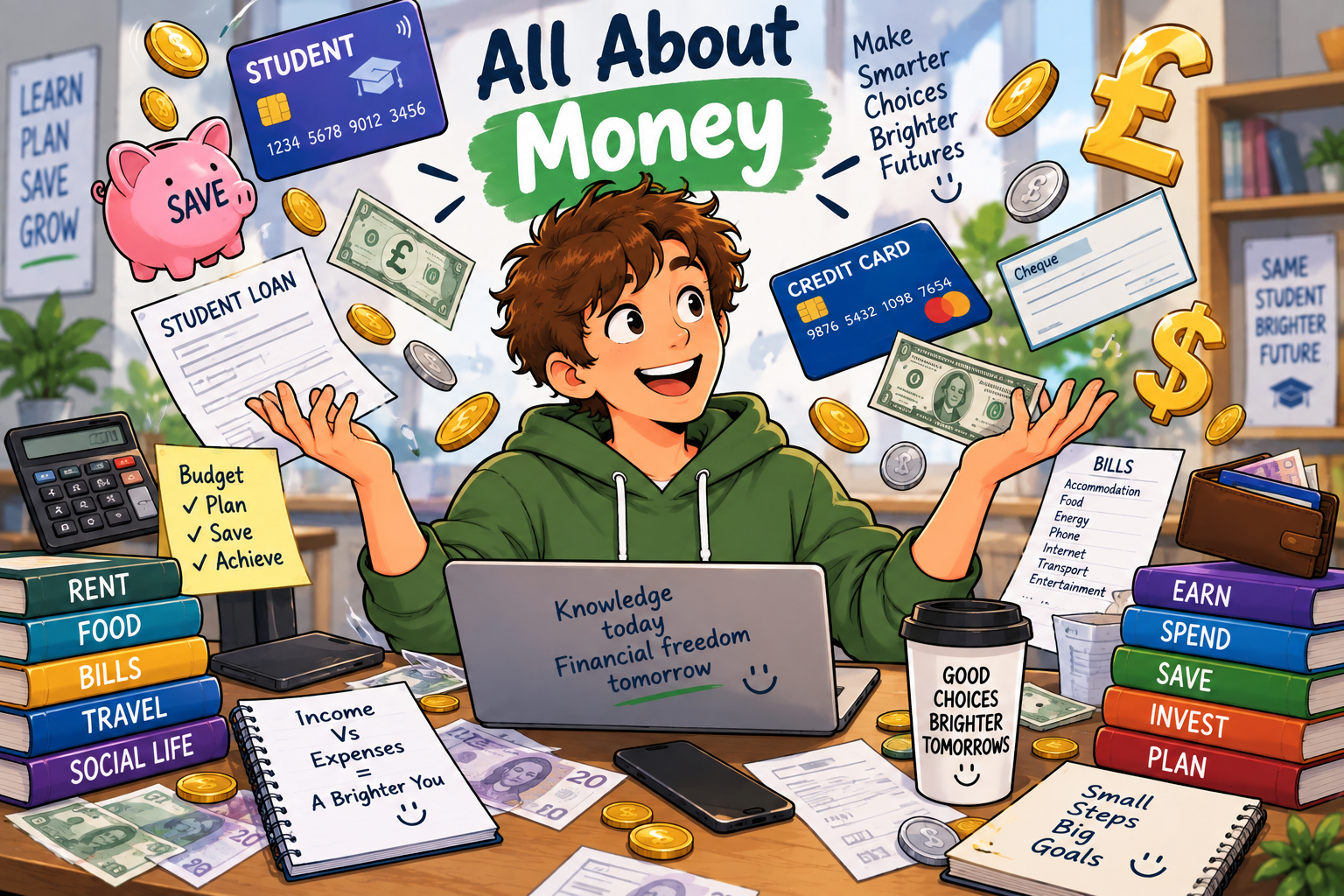
All About Money
OVERDRAFTS
An overdraft is borrowed money
Many student bank accounts offer an interest-free overdraft.
Used carefully, this can provide a useful safety buffer.
But an overdraft is not extra income.
If your account shows:
£500 available
but you are already £1,000 into your overdraft, you don’t have £500 of your own money.
You owe £1,000.
Try not to treat the maximum overdraft limit as a spending target.
Eventually it will need to be repaid.
CREDIT CARDS
Credit can make spending feel less real
Credit cards allow you to spend money you do not currently have.
That can be useful in some circumstances, but it can also make it easier to spend beyond your means.
If you don’t repay the full balance, interest can make the original purchase significantly more expensive.
Before putting something on a credit card, ask:
If I didn’t have the credit card, would I still buy this?
And:
How am I going to repay it?
Avoid using long-term borrowing simply to maintain everyday spending that your normal income cannot support.
BUY NOW, PAY LATER
Buy Now, Pay Later services can make purchases look more affordable by splitting the cost into smaller payments.
But the total price hasn’t changed.
Using several services at once can make it difficult to remember how much you have committed to paying in future.
Before using one, include all future instalments in your budget.
LOANS AND BORROWING
Borrowing can solve a short-term cash problem while creating a longer-term financial one.
Before borrowing, understand:
- How much you will receive
- How much you must repay
- When repayments start
- How much interest or fees will be charged
- What happens if you miss a payment
Be particularly cautious about very high-cost or short-term credit.
If you are considering borrowing because you cannot afford essential living costs, speak to your university’s student support or money-advice service first.
There may be other help available.